Treat the bright piece as the outfit's light source
A strong colour becomes difficult only when every other part of the outfit tries to compete. Give the brightest linen piece one clear job: it is the place the eye lands first. Shoes, trousers, bag and jewellery can then support it through quieter colour, repeated texture or a single small echo of the main shade.
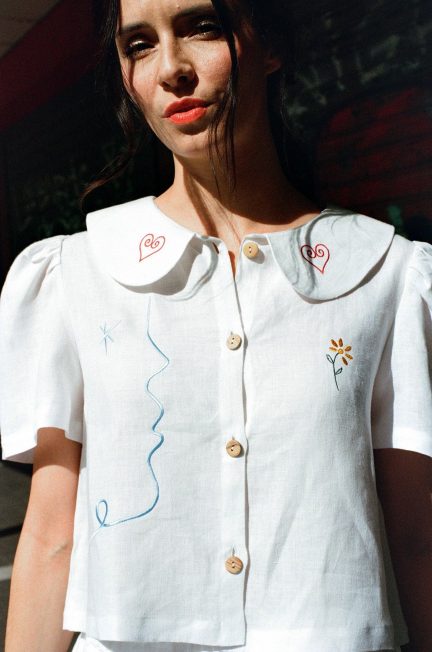
This is particularly effective with a blouse because colour sits close to the face. Jade, berry, marigold and primrose can change the energy of familiar jeans or tailored trousers without changing the basic wardrobe. If a shade feels too loud in a full dress, try it above the waist first and keep the lower half in denim, white, natural linen or black.
Balance volume with one clean edge
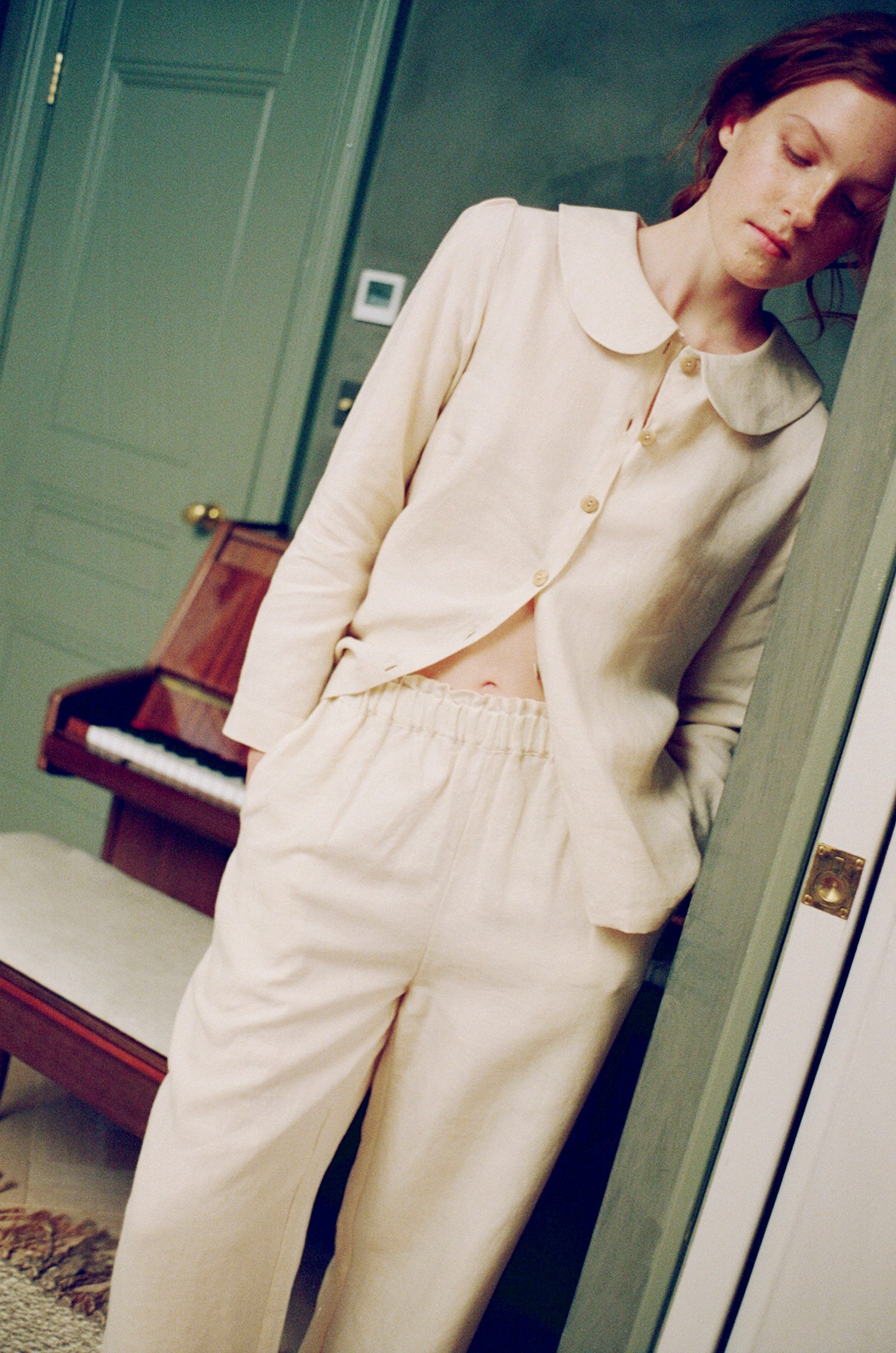
Linen often has generous sleeves, gathers or a soft body. Keep one boundary crisp so the outfit retains shape. A partial tuck reveals the waist, a straight trouser provides a vertical line, and a rolled cuff can expose the wrist. These are small styling decisions, but they stop a relaxed fabric from reading as accidental volume.
Cropped blouses are useful because the proportion is already defined. With a longer blouse, test it worn loose, half tucked and fully tucked before deciding which bottom works. Take a quick photograph from the front and side; the camera makes balance easier to see than a mirror viewed at close range.
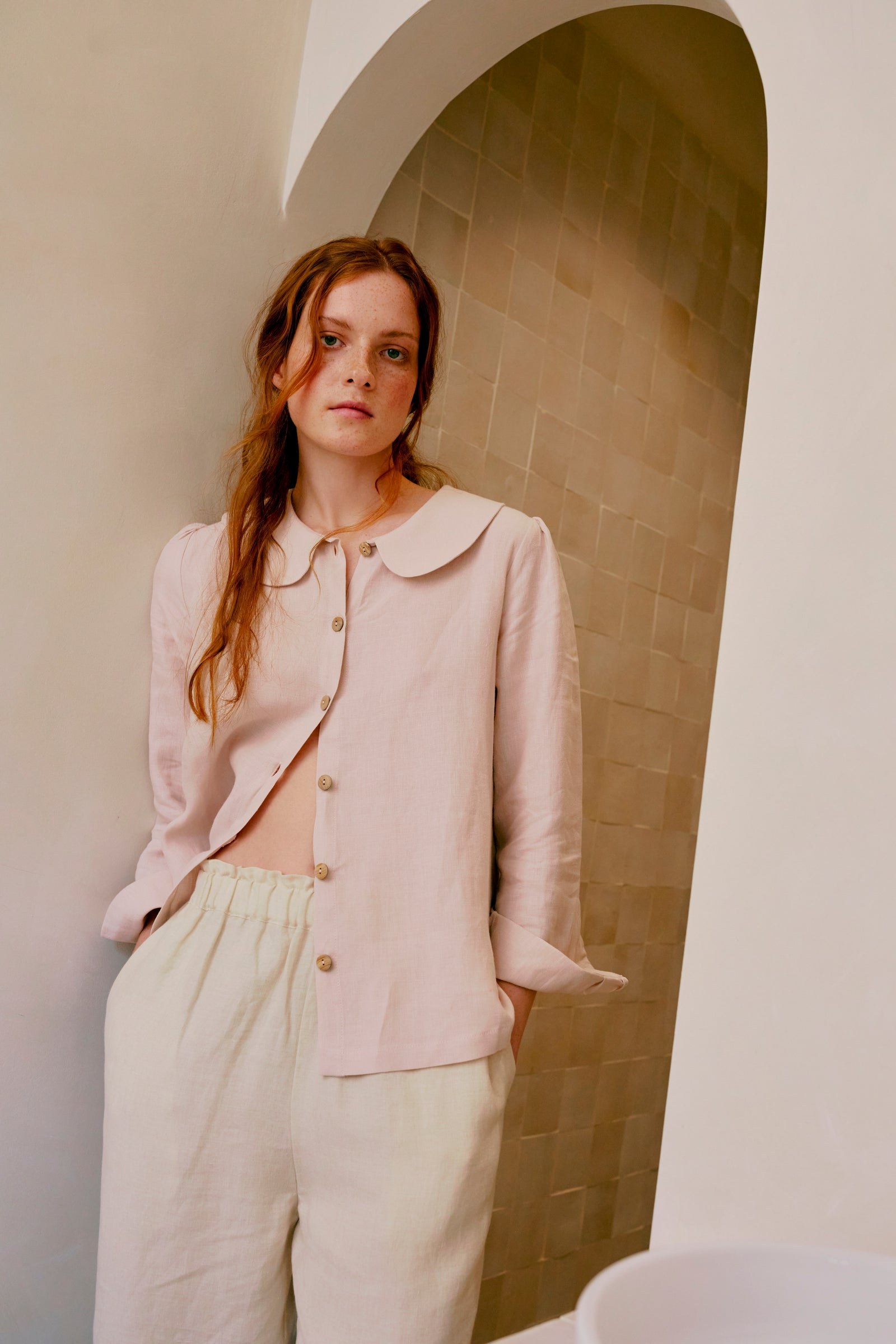
Pair colour by temperature, not by habit
Instead of asking whether two named colours match, compare their temperature. Warm marigold sits naturally with cream, tan, warm denim and tomato red. Cooler jade or sky blue can work with crisp white, charcoal, silver and deep navy. Berry can move either way depending on whether its undertone leans blue or red.
A pattern can bridge two temperatures. A blue gingham blouse, for example, can take a warm leather sandal because the natural texture softens the contrast. Wooden buttons do a similar job, adding an earthy note to a vivid cloth. This is one reason garment details matter: they introduce colours you can repeat elsewhere without forcing an exact match.
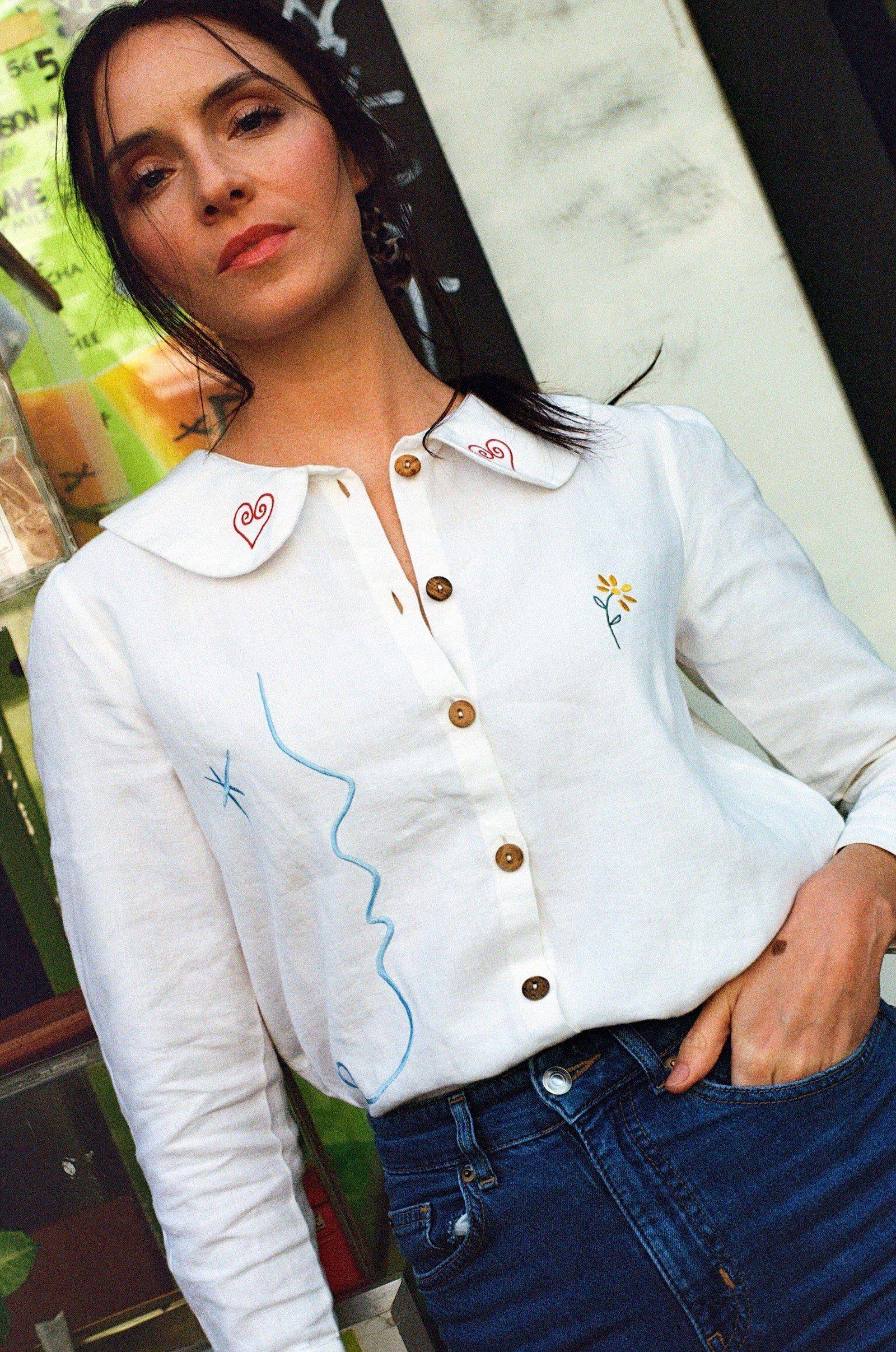
Buy slowly enough to learn the piece
A bright garment should earn several roles before another one is added. Wear it once with denim, once with a neutral linen bottom and once under a jacket or cardigan. Notice which jewellery scale works, whether the collar wants an open neckline, and how the fabric changes after washing. That information is more valuable than a theoretical outfit saved to a mood board.
Má + Lin describes its approach around consciously made linen pieces, flattering shapes and an awareness of fast fashion's costs. The practical version of that idea is to choose fewer garments with enough character to be repeated. Colour does not have to be a seasonal experiment. With a calm silhouette and a small supporting palette, it can become the most dependable part of the wardrobe.
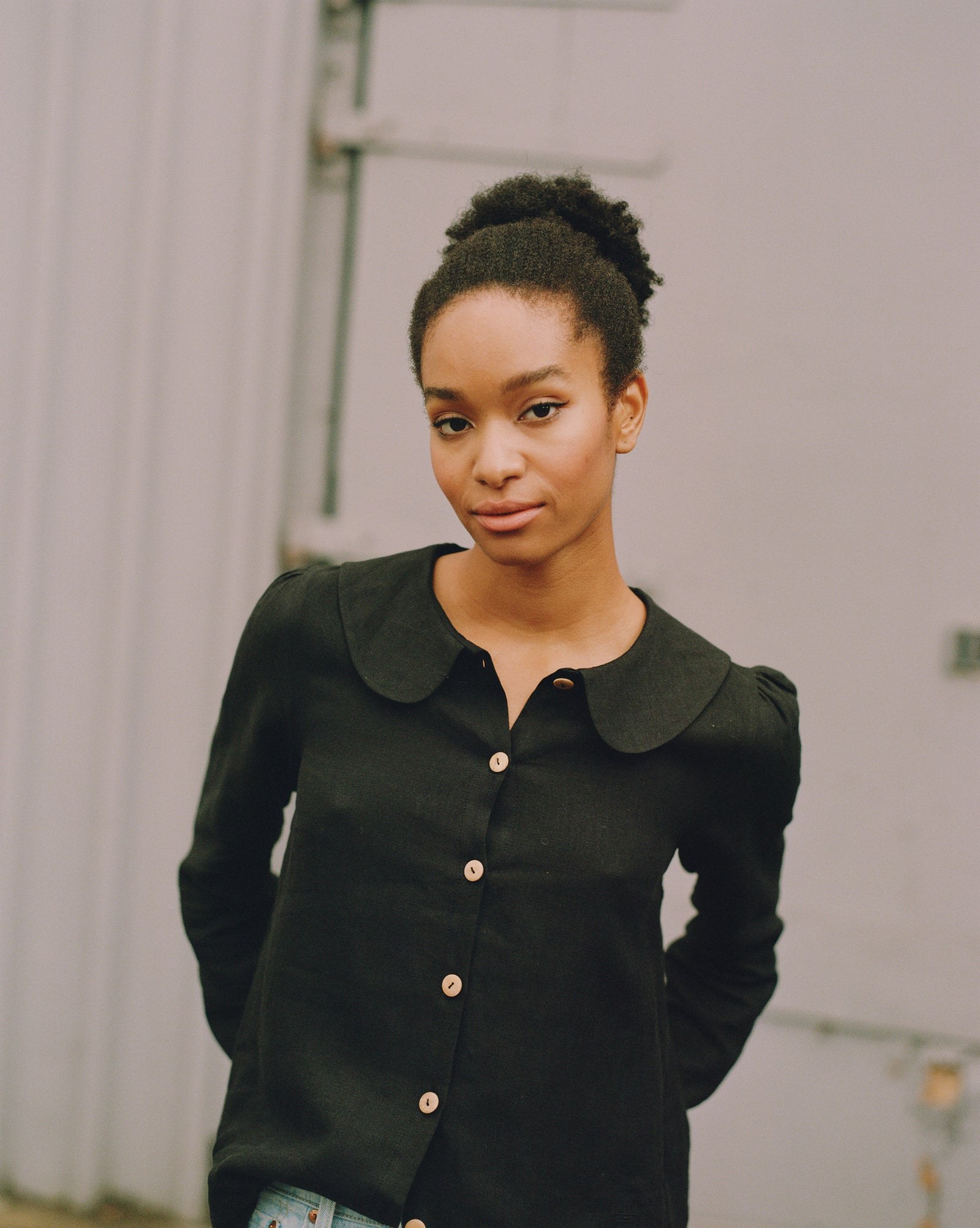
Use accessories to repeat, not compete
When the blouse carries the strongest colour, accessories can repeat one small element rather than introduce another headline. A wooden bangle can echo a button, a woven bag can pick up linen's dry texture, and a single earring colour can return in the shoe. Repetition makes a look feel finished even when every item was bought at a different time.
Scale matters more than quantity. A blouse with a decorative collar may need no necklace, while an open neckline can hold one sculptural pendant. Full sleeves often look cleaner with a ring than a stack of bracelets. Put on the outfit first, then add one accessory at a time and stop as soon as the colour looks intentional.
Move the colour through the seasons
Bright linen does not have to disappear when summer ends. Under a dark cardigan or soft jacket, a vivid collar becomes a controlled flash of colour. A berry blouse can work with charcoal wool, jade with navy, and primrose with warm brown. The texture contrast makes the linen look considered rather than out of season.
On colder days, keep the linen away from heavy friction if the weave is delicate and layer a smooth base underneath. The aim is not to force every garment into twelve months of use. It is to recognise that a strong colour can have a longer life than its original styling photograph suggests, especially when the surrounding palette becomes deeper and quieter.