A 60-inch square shawl gives you 3,600 square inches of fabric, yet the wrong fold can make it look smaller, bulkier, and less polished than a jacket. The right wedding guest dress with shawl combination should solve three problems at once: coverage, temperature, and dress-code control.
A shawl also changes the mood of an outfit. Draped loosely over the arms, it feels relaxed. Folded into a narrow stole, it looks formal. Wrapped across the shoulders, it creates warmth without hiding the shape of the dress. These seven rules explain how to choose one that looks intentional instead of borrowed at the last minute.
1. A Shawl Is Not Only for Cold Weather
It controls the level of formality
Best verdict: treat the shawl as part of the outfit, not emergency insulation. A lightweight wrap can make a sleeveless midi dress suitable for a church ceremony, a garden reception, or an evening venue with strong air conditioning. It adds a second line and texture around the shoulders, which makes a simple dress look more finished.
The same piece can also lower the drama of a formal gown. A wide matte shawl softens sequins and satin. A narrow silk stole sharpens a plain crepe dress. This is why buying a wrap after choosing the dress often produces a better result than buying a matching set without seeing the full silhouette.
Coverage should match the ceremony
For a religious ceremony or conservative venue, choose a shawl wide enough to cover both shoulders and the upper chest when worn across the front. A piece around 24 to 30 inches wide works for light coverage. A 50- to 60-inch square gives more ways to fold and pin it.
For an outdoor cocktail wedding, a narrower wrap is easier to manage. It will not drag through grass or slide off while you hold a drink. The key is movement. You should be able to lift your arms, sit down, and greet someone without pulling the shawl back into place every few minutes.
Do not match the dress too literally
Exact color matching can look flat, especially when the fabrics have different finishes. A matte navy dress works better with soft gray, silver, or muted blue than with a shiny navy wrap. A burgundy dress can take blush, taupe, or deep rose. Contrast gives the outfit depth while keeping the dress as the main focus.
2. The Best Shawl Color Depends on the Dress Undertone
Warm dresses need warm support
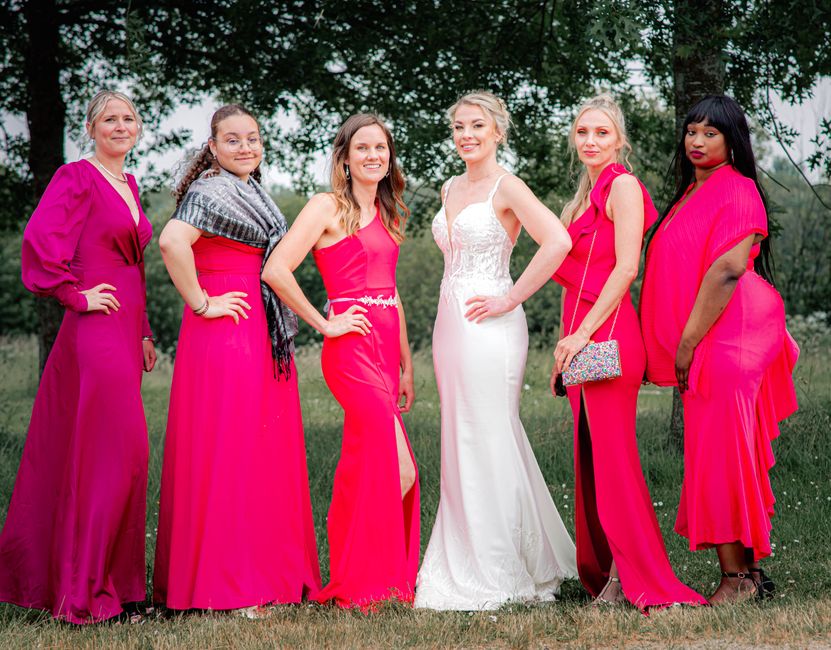
Start by checking the undertone rather than the name of the color. Terracotta, rust, olive, camel, cream, and warm red usually look strongest beside champagne, bronze, camel, warm taupe, or muted blush. These combinations appear soft in daylight and rich under reception lighting.
Bright white is rarely the easiest partner for a warm dress. It can make cream or golden fabric look yellow by comparison. Ivory works better for most daytime weddings, but choose a shade clearly different from bridal white. The goal is to support the outfit without creating a pale block around the shoulders.
Cool dresses need clean contrast
Blue, emerald, plum, cool pink, charcoal, and true red pair well with silver, dove gray, black, icy blue, or crisp ivory. A cool lavender dress with a yellow-beige wrap can look disconnected, even when both colors are attractive alone. Gray is the safest neutral for cool tones because it adds contrast without competing with jewelry.
Black is useful, but it is not always the most flattering choice. A black shawl can visually widen the upper body when placed across the chest, and it can make a floral dress feel heavier. Use black when the dress already has black details, dark shoes, or a formal evening finish.
Use the lighting test before buying
Take the dress near a window and photograph it beside two possible shawls. Then check the images in warm indoor light. A color that looks elegant outdoors can turn gray or overly orange inside a reception hall. This five-minute test catches more mistakes than guessing from a website thumbnail.
Strong color contrast is not automatically wrong. A deep green dress with a pale pink shawl can look fresh at a spring wedding. Keep the rest of the accessories quiet so the color pairing remains deliberate.
3. The Best Wedding Guest Dress With Shawl Changes by Venue
Comparison table: shape, coverage, and price
| Wedding setting | Best dress shape | Shawl approach | Example listed price |
|---|---|---|---|
| Garden or daytime | Floral chiffon midi | Light ivory or taupe wrap | Petal & Pup Myles Floral Chiffon Maxi Dress, $129 before sale |
| Church ceremony | A-line dress with shoulder coverage | Matching or matte shawl worn across the shoulders | Alex Evenings Floral Cowl Neck A-Line Dress with Shawl, $249 |
| Cocktail reception | Fit-and-flare chiffon midi | Narrow silk or satin stole | Dress the Population Corey Chiffon Fit & Flare Cocktail Dress, $198 |
| Formal evening | Floor-length flowing gown | Wide chiffon wrap in a close neutral | Mac Duggal Tied One Shoulder Cut-Out Flowy Gown, $338 |
| Black-tie optional | Embellished high-low dress | Minimal wrap with a matte finish | Eliza J Embellished High/Low Chiffon Dress, $188 |
These prices are useful as shopping benchmarks, not promises. Retailers change sale prices, colors, and stock. The more important comparison is proportion. A full shawl looks balanced with a slim dress or a gown. A narrow stole suits a dress with volume, ruffles, or an embellished neckline because it will not add another large shape.
Choose the clearest winner for each setting
For a church ceremony, the Alex Evenings Floral Cowl Neck A-Line Dress with Shawl is the strongest ready-made choice. The included shawl removes the color-matching problem, and the A-line shape leaves room to sit comfortably. For a daytime outdoor wedding, the Petal & Pup Myles Floral Chiffon Maxi Dress offers a lighter, more relaxed direction, but add a separate wrap if the evening temperature will drop.
For cocktail dressing, the Dress the Population Corey Chiffon Fit & Flare Cocktail Dress wins because its defined waist needs a slim stole rather than a bulky square wrap. For formal evening events, the Mac Duggal gown is the more convincing option. Its length and flowing shape can handle a larger shawl without looking crowded.
When not to buy a matching shawl
Skip the matching wrap when the dress already has a busy floral print, heavy beading, or a dramatic sleeve. Adding the same pattern or shine around the shoulders can make the outfit look like a costume. Buy a single-color wrap instead. A matte taupe, soft gray, or deep navy piece will work with more than one dress and give the outfit a calmer finish.
4. How to Wear a Shawl Without Losing Your Hands
Use the three-step shoulder fold
- Fold the shawl lengthwise until it is about 10 to 14 inches wide. This turns a large square into a clean stole.
- Place the center behind your neck and let both ends fall evenly over the front of your arms.
- Pin one end beneath the opposite arm with a small safety pin, fashion brooch, or hidden magnetic clasp.
This fold works best for dinner, photographs, and walking between indoor and outdoor spaces. The pin matters because a shawl that constantly slips creates a fussy silhouette. Place the fastening under the arm, where it stays hidden and does not pull at the neckline.
Use the front wrap for more coverage
For a ceremony, hold the shawl behind your neck, cross the ends over the front of your chest, and tuck them under the opposite elbows. Keep the fabric flat. Twisting the shawl creates a rope-like line that adds bulk near the bust and can make the dress waist disappear.
If the fabric is slippery, use body tape designed for clothing or two tiny pins at the shoulder seams. Do not pin directly through delicate silk, lace, or sequins. The small hole may show after the event, especially on a fine weave.
Keep one hand free in photographs
Before leaving home, practice holding a clutch, greeting someone, and sitting down. If the wrap falls when you bend your elbows, it is too loose or too short. The best wedding guest shawl looks effortless because it has been secured before the first photograph.
5. Fabric and Size Matter More Than the Label
Pick fabric by season and venue
Chiffon is the most flexible choice for weddings. It is light, drapes well, and works with floral, satin, and crepe dresses. Silk has a richer hand and a cleaner edge, but it can slide off bare shoulders. Satin looks polished in evening light, yet it can read too shiny beside a casual cotton-blend dress.
For a cool outdoor wedding, choose wool, cashmere, or a viscose blend with visible weight. These fabrics hold their shape and give real warmth. For summer, avoid thick knit wraps unless the event is very casual. They can overwhelm a delicate dress and make the outfit feel more like travel clothing than occasionwear.
Choose size by the job it must do
A wrap around 20 to 24 inches wide is enough for a narrow shoulder drape. A 28- to 32-inch rectangular shawl gives better coverage without becoming difficult to control. A 50- to 60-inch square is the most versatile option, but only if the fabric is light. A heavy square shawl can add several inches around the upper body when folded.
Check the finished edge. A neat rolled hem looks refined in photographs. Loose threads, uneven fringe, and a stiff synthetic shine are warning signs. The shawl sits close to the face, so poor texture is more visible than it would be on a skirt or handbag.
Know the tradeoff before choosing silk
Silk wins on softness, drape, and formal appearance. It loses on grip and price. A polyester chiffon wrap costs less and stays in place more easily, although it may not feel as luxurious. For a one-time wedding outfit, polyester chiffon is the better value when the dress already has a strong finish. Choose silk when you plan to wear the wrap with several dresses over many seasons.
6. Common Shawl Mistakes and the Fix for Each
Q: Why does my shawl make the dress look larger?
A: The fabric is probably too wide, too heavy, or folded at the wrong point. A wide wrap placed across the chest creates a horizontal band. Fold it into a narrower stole and let the ends fall vertically. If the dress has a full skirt or ruffles, avoid a bulky square shawl. The Dress the Population Corey Chiffon Fit & Flare Cocktail Dress, for example, needs a slim wrap that keeps the fitted waist visible.
Q: Can a wedding guest wear a white shawl?
A: Use white only when it is clearly an accessory shade, not a bridal-looking cover-up. Ivory, champagne, and pale silver are safer than bright white, especially with a simple white or cream dress. A colorful dress with a white wrap can work, but keep the dress visibly dominant and avoid a floor-length silhouette that resembles bridalwear.
Q: What makes a cheap shawl look obvious?
Common problems include a shiny finish beside matte fabric, uneven hemming, excessive fringe, and a color that does not appear anywhere else in the outfit. A low-cost wrap can still look good when its texture is quiet and its edge is clean. Test it beside the dress, shoes, and jewelry before removing the tags.
Another mistake is buying a shawl that matches the dress but not the venue. A glittery wrap may suit a black-tie evening but look wrong at a daytime garden ceremony. Match the finish to the light level first, then match the color.
7. The Best Formula Is One Dress, One Quiet Wrap, One Clear Finish
Build the outfit around the neckline
For most wedding guests, the winning formula is a dress with a clean neckline, a shawl one shade lighter or darker, and simple shoes that repeat one color from the wrap. This keeps the eye moving from face to dress instead of stopping at a crowded shoulder line. If the dress has one shoulder, use the shawl only during the ceremony and remove it for the reception. If the dress has a high neckline, drape the wrap behind the arms instead of across the chest.
The Alex Evenings dress with its matching shawl is the easiest route for someone who wants coverage with no styling guesswork. The Eliza J Embellished High/Low Chiffon Dress is better with a plain wrap because the embellishment already supplies enough visual interest. The Mac Duggal gown deserves a wide, fluid shawl in a close neutral; a small stiff scarf would make the proportions feel accidental.
Make the final decision before checkout
Stand, sit, raise both arms, and walk ten steps while wearing the complete outfit. Check the shawl from the side, not only from the front. It should stay clear of the floor, avoid covering the smallest part of the waist, and remain secure without constant adjustment.
Do not buy a shawl just because it completes a product photograph. Buy it because it solves a real problem for your venue, your dress shape, and the hours you will spend wearing it. The single most important takeaway is this: choose the wedding guest dress first, then use a lightweight, properly sized shawl to control coverage and formality without hiding the dress.