
Give the shelf a sentence
A shelf feels intentional when you can describe it in one sentence. 'Animated films with icy colours' is a direction. 'Characters I like' is only a storage category. The sentence does not need to be serious, but it should be specific enough to guide the next purchase. That small rule stops every attractive new release from competing for the same square metre.
Begin by removing everything and grouping pieces on a table. Sort first by visual family rather than monetary value: colour, franchise, scale and mood. You may discover that three pieces already form a strong scene while the rest belong elsewhere. A collection does not have to be displayed all at once. Rotation gives familiar pieces new energy and protects the shelf from becoming a dense line of boxes.
Build height before adding quantity
Flat rows are easy to assemble but hard to read. Use two or three height levels so the eye can move through the display. A small stack of art books, a discreet riser or a sturdy box turned on its side can lift the back row. Keep the construction stable and place heavier items low. The aim is not to create a shop window; it is to stop one figure hiding another.
Leave a deliberate gap around the focal piece. Empty space is useful: it separates silhouettes and gives the most meaningful item a reason to lead. If the shelf is narrow, choose one hero piece, two supporting figures and a quiet object such as a framed ticket or postcard. The personal object turns a branded collection into a story about the owner.

Let colour do the organising
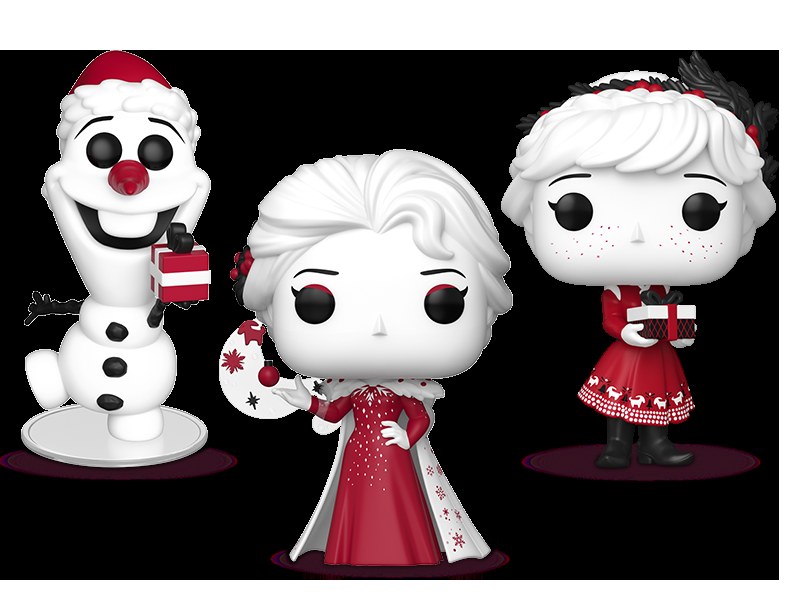
Colour can connect characters from different stories without making the display feel random. Repeat one accent three times across the shelf, then let neutral packaging or books calm the gaps. A cool palette can carry winter animation pieces; red and black can pull superhero figures together; a metallic finish may be enough to bridge sport and film memorabilia in a shared room.
Lighting should reveal colour rather than bleach it. Avoid long exposure to direct sun, which can fade boxes and printed surfaces. A warm, diffused lamp positioned outside the shelf usually looks softer than a bright strip aimed directly at faces. Dust is easier to manage when pieces have breathing room, another practical argument for editing the display instead of filling every edge.

Buy the next piece for a role
Before adding a gift to someone else's shelf, decide what role it will play. Is it the centrepiece, a missing member of a group, a seasonal surprise or a compact desk companion? Funko's gift guide is useful here because it separates best sellers, small gifts, advent formats, personalised figures and fandom categories. Those routes answer different display problems.
For an established collector, a precise supporting piece often lands better than the loudest option. For a new collector, choose a recognisable character that can stand alone. Add a note explaining why you chose it, especially if the connection is to a shared film, match or trip. That note is what turns a shelf object into a marker of time.

Mix boxes and open figures with a rule
Boxed and unboxed pieces can share a shelf when one format clearly leads. Try a back row of two boxed figures with one open figure in front, or keep a run of open figures and use a single box as a graphic backdrop. Avoid alternating box, figure, box, figure across the entire width; the repeated change in scale makes the eye work harder than it should.
If packaging artwork is important, turn one box slightly toward the room while the others face forward. That small angle reveals depth without creating disorder. Keep stands, spare accessories and instruction inserts in labelled envelopes elsewhere. Display only the parts that strengthen the composition, and store the rest well enough that a future rotation remains easy.
Create a five-minute maintenance rhythm
A display stays enjoyable when maintenance is brief. Once a week, use a clean microfibre cloth on the shelf and a soft makeup brush around textured figures. Work from the top down and move only a few pieces at a time so the arrangement can be restored. Avoid household sprays near printed boxes or painted surfaces; apply any appropriate cleaner to the cloth, never directly to the collection.
Every few months, photograph the arrangement, remove one group and try a new focal point. The photograph acts as a reset button if the experiment fails. This is also the moment to check sunlight, shelf stability and crowding. Editing is not a verdict on the collection. It is how a display continues to feel curated as the collection changes.