Three hours into a trail in Algonquin, your socks are soaked. At that point, everything you spent on your jacket, pack, and poles becomes irrelevant. Footwear determines whether a hiking trip ends well or ends early — and Canadian conditions make that margin especially unforgiving.
This piece covers the boots that perform on real Canadian terrain, the specs that actually predict durability, and the mistakes that cost hikers money every single season.
The Top Hiking Boots for Canadian Trails, Compared
Waterproofing is not optional in Canada. Morning dew, sudden rain, and seasonal snowmelt make wet trail conditions the norm across most provinces. Every boot on this list has a waterproof membrane — that is the starting requirement, not a bonus feature. Here is how the top options stack up:
| Boot | Best Use Case | Waterproofing | Weight (pair) | Price (CAD, approx.) |
|---|---|---|---|---|
| Salomon X Ultra 4 Mid GTX | Day hikes, light backpacking | Gore-Tex | 960g | $230–$260 |
| Merrell Moab 3 Mid WP | Casual trails, wide foot | Waterproof membrane | 1,040g | $170–$195 |
| Hoka Anacapa 2 Mid GTX | Long-distance, high cushioning | Gore-Tex | 870g | $250–$280 |
| Scarpa Zodiac Tech GTX | Alpine scrambling, technical routes | Gore-Tex | 1,190g | $480–$530 |
| La Sportiva TX4 Mid GTX | Approach routes, mixed rock and trail | Gore-Tex | 1,100g | $370–$410 |
The Salomon X Ultra 4 Mid GTX is the most versatile boot here. Light enough for fast day hikes, stable enough for a loaded pack on a two-night trip. The Contagrip outsole grips wet rock reliably — something budget options fail at consistently. For most recreational Canadian hikers, this is the right boot.
The Merrell Moab 3 earns its spot as the entry-level workhorse. It fits a wide foot better than Salomon. The Vibram outsole holds up on dirt and gravel. Don’t take it on technical scrambles — it’s not built for that.
For serious alpine terrain — Kananaskis, Garibaldi, or anywhere above 1,500 metres on loose shale — the Scarpa Zodiac Tech GTX is the boot that belongs there. It’s stiff enough for crampon compatibility and precise enough for exposed footwork. At over $500, it’s completely wasted on a flat conservation trail in Ontario.
Why Canadian Terrain Demands More From Your Footwear
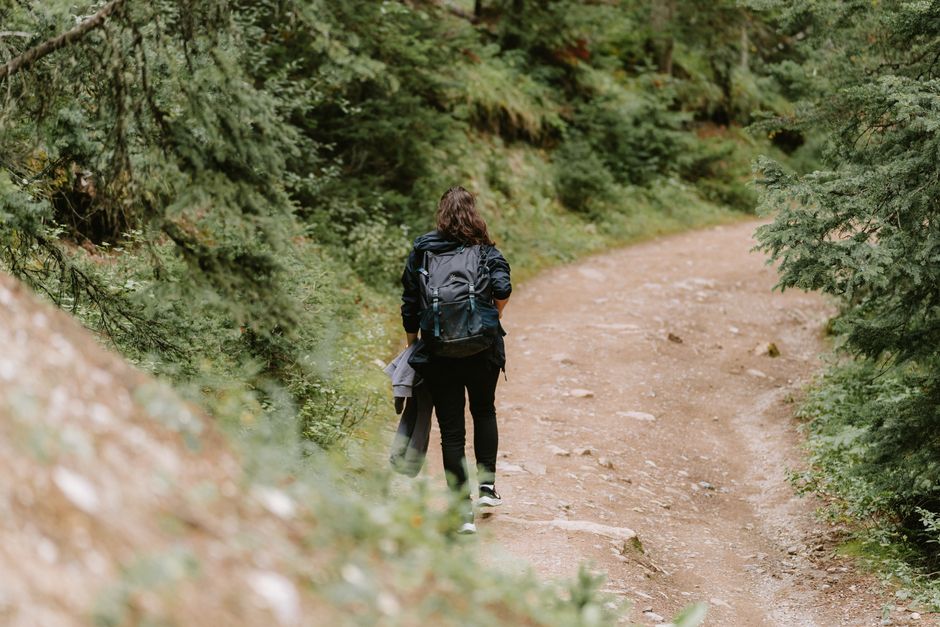
Most hiking boot guides are written for general conditions. Canadian terrain doesn’t have general conditions.
Coastal BC trails — the Juan de Fuca Marine Trail on Vancouver Island, the North Shore above Vancouver — see annual rainfall exceeding 2,000mm in some areas. Trails stay wet nine months of the year. A boot without a proper waterproof membrane fails within an hour on most spring and fall hikes in that region. This isn’t edge-case weather. It’s the baseline.
The Rockies present a separate challenge entirely. Temperatures drop 15 degrees in an afternoon at elevation. Mornings above 2,000 metres sit below freezing in August. An uninsulated boot that works fine at the Banff trailhead will feel inadequate three hours later when you’re crossing a snowfield with wind coming off the ridge. This is where shoulder-season hikers consistently underestimate conditions.
Ontario and Quebec hiking falls between those extremes. Humid summers bring heavy rain. Freeze-thaw cycles turn shoulder-season trails into mud. The Canadian Shield adds granite slabs and exposed root systems — both of which demand an outsole with real grip, not just cushioning.
What this means practically: the most important specs shift by region. In BC, Gore-Tex waterproofing and membrane quality are non-negotiable. In Alberta, insulation level matters from September through May. In Ontario, grip on wet granite is as critical as waterproofing.
Cheap waterproof membranes delaminate after one hard season. Outsoles without proper lug depth become dangerous on wet granite. Low ankle collars offer nothing when a foot rolls on a root. The price gap between a $150 boot and a $230 boot almost always maps to these failure points — not brand premium alone.
Five Specs That Predict Real-World Performance
Strip away the marketing language. These are the specs that separate boots that work from boots that don’t:
- Waterproof membrane type: Gore-Tex breathes better than lower-tier membranes and lasts longer before delaminating. When a product page lists only “waterproof membrane” without specifying a brand, assume it’s a budget liner. For Canadian conditions, look for Gore-Tex Extended Comfort or Gore-Tex Performance — not off-brand equivalents.
- Outsole compound: Vibram Megagrip — used on La Sportiva and select Scarpa models — outperforms standard Vibram on wet rock significantly. Salomon’s Contagrip is competitive across most terrain. Generic rubber compounds harden in cold temperatures and lose grip fast.
- Ankle height: Mid-cut boots work for most Canadian hiking. They provide lateral support on uneven terrain without the long break-in period of a mountaineering boot. Low-cut trail runners are fine on groomed, flat trails. They are a liability with a loaded pack on loose or rooted terrain.
- Midsole stiffness: Softer midsoles reduce fatigue on long days — this is the case for the Hoka Anacapa 2’s thick EVA stack. Stiffer midsoles transfer power better on technical terrain. Most Canadian day hikers perform best with a medium-stiffness boot like the Salomon X Ultra 4.
- Lug depth and spacing: Four to five millimetres handles most trail conditions. Deeper lugs at 5–6mm self-clean better in mud, which matters for spring trails in Ontario and Quebec. Shallow lugs load up quickly and lose traction precisely when you need it most.
One tip worth following regardless of which boot you pick: apply a DWR refresh spray like Nikwax TX.Direct at the start of each season. The Gore-Tex membrane itself is durable, but the outer fabric’s water-repellent coating degrades with use. When water stops beading and starts soaking in, the boot feels wet even though the membrane is fine. A $15 bottle solves this and adds noticeable life to any waterproof boot.
Boot-Buying Mistakes Canadian Hikers Make Repeatedly
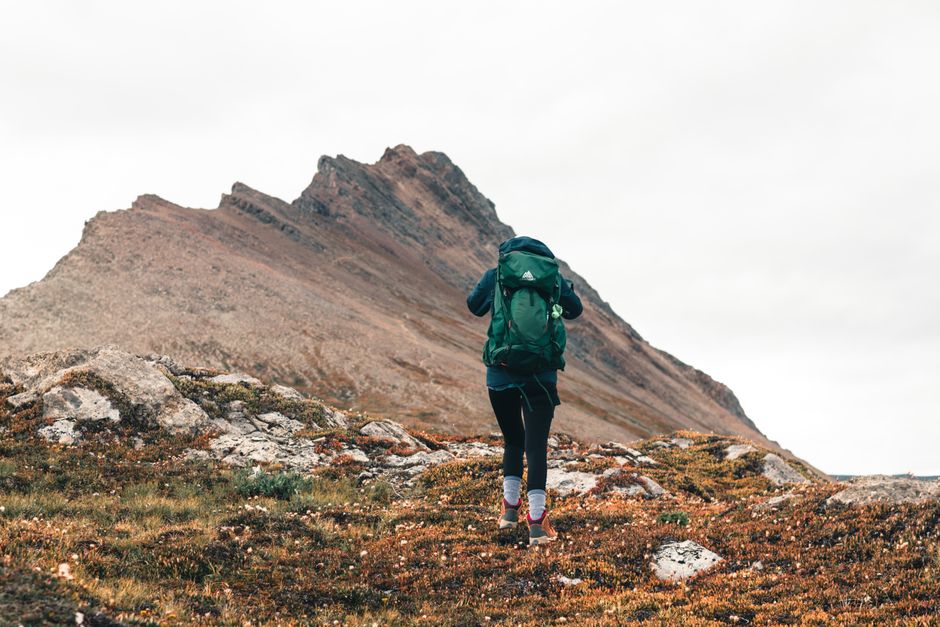
The most expensive mistake is buying based on appearance. The second is buying for conditions you don’t actually hike in. Both happen constantly.
- Skipping the in-store fitting: Salomon runs narrow in the toe box. Merrell runs wide. La Sportiva runs long. Online sizing charts don’t capture this. Go to MEC or a specialty outdoor retailer, wear the socks you actually hike in, and walk the store for 15 minutes minimum. If ordering online, factor in return shipping — you will likely need it.
- Assuming one boot handles year-round Canadian use: An uninsulated Gore-Tex boot is comfortable from late May through early October in most of Canada. Once overnight temperatures drop below 5°C consistently, you need at least 200g of insulation. This is a separate purchase from your summer boot — not an upgrade of it.
- Not breaking in the boots before a long trip: Leather-upper boots need 20–30km of wear before any significant outing. Even synthetic boots benefit from a few shorter hikes first. Arriving at a 25km route in brand-new boots is how hikers end up with blisters that take three days to recover from.
- Ignoring midsole age: EVA foam compresses permanently over time. After 800–1,000km, cushioning and support drop off significantly — often without visible wear on the outside. If your boots are three or more years old and you hike regularly, the midsole is likely past its useful life regardless of how they look.
- Over-speccing for easy terrain: A technical alpine boot on a groomed trail is genuinely uncomfortable. Stiffer shanks and aggressive tread work against you on flat, well-maintained paths. Match the boot to your actual trips, not aspirational ones.
The Honest Verdict: Which Boot for Which Hiker
For most Canadian recreational hikers doing weekend day trips, occasional overnights, and mixed terrain — buy the Salomon X Ultra 4 Mid GTX. It handles wet trails, grips rock, fits a medium-width foot, and weighs less than most competitors at the same price. At $230–$260 CAD, it’s the boot that doesn’t disappoint after the first hard season.
Budget is a real constraint for many people. The Merrell Moab 3 Mid WP at $170–$195 is the right call for easy to moderate trails without scrambling. It fits wide feet better than Salomon and the Vibram outsole holds up on packed dirt.
If you log 40+ km weeks and need your feet to feel functional at the end of them, the Hoka Anacapa 2 Mid GTX at $250–$280 delivers more cushioning than any other boot on this list. The maximal midsole is a genuine advantage on long days, with a trade-off in stability on technical terrain. For distance hikers, that’s a reasonable exchange.
For technical alpine routes — anything involving exposed ridgelines, crampon use, or serious scrambling — the Scarpa Zodiac Tech GTX and La Sportiva TX4 Mid GTX are the correct tools. Nothing else here belongs above treeline on loose shale.
How Long Hiking Boots Last — and When to Replace Them
What is the realistic lifespan of a quality hiking boot?
Under regular use — 200 to 400km per year — expect three to five years. The midsole gives out before the upper in most cases. Press your thumb into the midsole: if it doesn’t compress at all, the foam has hardened past the point where it protects your joints. That is your replacement signal, not the condition of the outer leather or fabric.
Is resoling worth the cost?
Full leather boots with stitched-welt construction — like the Scarpa Zodiac — can be professionally resoled for $80–$120 CAD. Worth it when the upper is in good condition. Most synthetic and fabric boots can’t be resoled economically. Adhesive bonding doesn’t hold a replacement outsole the way stitching does, and the repair rarely outlasts a second season.
What maintenance actually extends boot life?
Beyond the seasonal DWR refresh mentioned earlier, store boots away from direct heat — not in a hot car or sunny garage. EVA foam degrades faster with repeated heat exposure. Apply a leather conditioner to full-grain leather uppers once a season. And if laces are fraying, replace them before they break mid-hike rather than after.
Get the waterproofing right for where you actually hike in Canada, and every other feature becomes a manageable secondary decision.