You booked a reformer class, showed up in loose cotton shorts and an old T-shirt, and spent the whole session tugging fabric out of springs. Or you wore your tightest compression leggings and couldn’t feel your feet during footwork. Either way, the outfit sabotaged the workout.
Pilates demands a specific kind of clothing. Not because of a dress code, but because the movements — rolling, stretching, gripping with your feet — require fabric that stays put, breathes, and lets you see your body alignment. Here are six rules that solve the problem for good.
1. Fabric Matters More Than Brand
Most people grab whatever is clean. That’s the first mistake. Pilates involves lying on your back, rolling over springs, and sliding on a carriage. Wrong fabric bunches, rides up, or makes you sweat in ways that ruin focus.
Cotton is the enemy. It absorbs sweat, gets heavy, and sticks to the reformer’s vinyl surface. You’ll slide when you don’t want to and stick when you need to glide. Synthetics or natural-synthetic blends work better.
Look for these specific fabric features:
- Four-way stretch — lets you move through the full range of motion without resistance
- Moisture-wicking — pulls sweat away from skin so you stay dry during a 50-minute session
- Matte finish — shiny fabrics show every sweat mark and can feel slippery on the reformer
Good options include Lululemon Nulu fabric (buttery, light, no pilling), Beyond Yoga Spacedye (soft, matte, holds shape wash after wash), and Girlfriend Collective compressive fabric (made from recycled plastic bottles, durable, opaque).
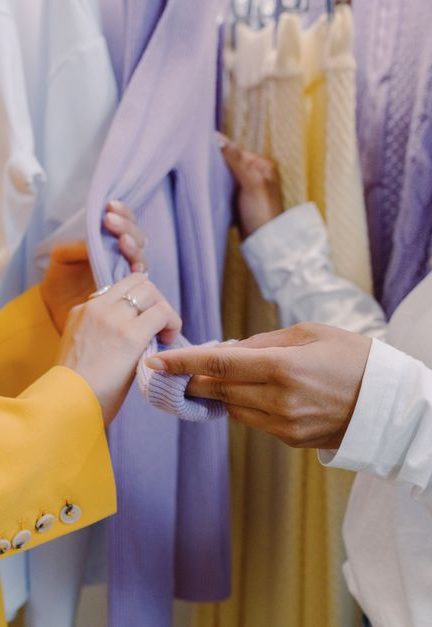
One specific test: pinch the fabric between your fingers. If it feels slick or plasticky, skip it. If it feels like a thick cotton jersey, skip it. You want something that feels like a second skin — supportive but not grabby.
2. The Bottom Fit Rules Every Body Type Needs
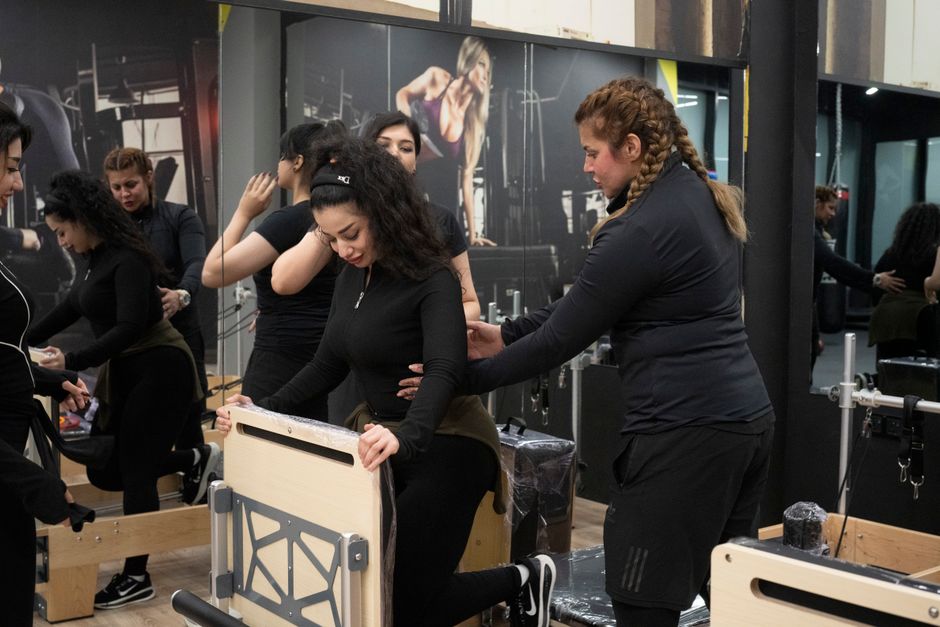
Your Pilates bottoms have one job: stay in place while you bend, fold, and roll. Most leggings fail because they are either too compressive (restricting hip flexors) or too loose (bunching behind the knees).
Here is the short version of what works:
| Bottom Type | Best For | What to Avoid |
|---|---|---|
| High-waisted leggings | Most body types. Stays put during rolling like a ball and teaser. | Low-rise. They roll down when you lie supine. |
| Bike shorts (5-7 inch inseam) | Warm studios or people who overheat. Great for footwork. | 2-3 inch inseam. They ride up and expose skin on the reformer. |
| Capri leggings | Petite frames. Hits at the widest part of the calf. | Flared or bootcut. The extra fabric gets caught in springs. |
Vuori Daily Leggings ($78) are a strong pick for most people. They are mid-weight, have a hidden waistband pocket, and don’t slide down during side-lying leg lifts. For a budget option, Old Navy Powersoft Leggings ($35) use a similar fabric blend and hold up for at least 50 washes.
If you prefer shorts, Alo Yoga High-Waist Airlift Short ($68) has a 5-inch inseam and a waistband that stays folded. The fabric is thick enough to not show underwear, even in a deep lunge.
One rule: test your bottoms at home. Lie on your back, bring your knees to your chest, and roll side to side. If anything shifts, those bottoms fail the class test.
3. Tops: You Need to See Your Spine
Pilates instructors cue from your body. “Tuck your tailbone,” “lengthen through the crown of your head,” “engage your transverse abdominis.” They can’t see your alignment if you’re wearing a baggy hoodie or a loose tank.
Fitted tops are not optional. You need the instructor — and honestly, yourself — to see whether your ribs are flaring or your shoulders are creeping toward your ears.
Three top styles that work:
- Racerback tank — shows your shoulder blades and upper back. Outdoor Voices Rectrek Tank ($35) is cut narrow enough to stay tucked but wide enough for full shoulder rotation.
- Cropped long-sleeve — good for cooler studios. Nike Dri-FIT One Luxe Cropped Top ($55) hits just above the waistband so your core is visible.
- Bodysuit — never rides up. Athleta Conscious Crop Bodysuit ($79) has a built-in shelf bra and full snap closure at the gusset.
What about sports bras? They are fine as a top if you are comfortable. But choose one with moderate coverage. Thin straps dig in during shoulder bridge holds. Reebok PureMove Bra ($40) has a flexible grid pattern that moves with you without chafing.
Avoid anything with a hood, zippers, or dangling drawstrings. They catch on the reformer ropes and springs. One student in my class lost a hoodie string inside the carriage track. It took the instructor five minutes to untangle it.
4. Grip Socks Are Non-Negotiable (Here’s Which Ones)
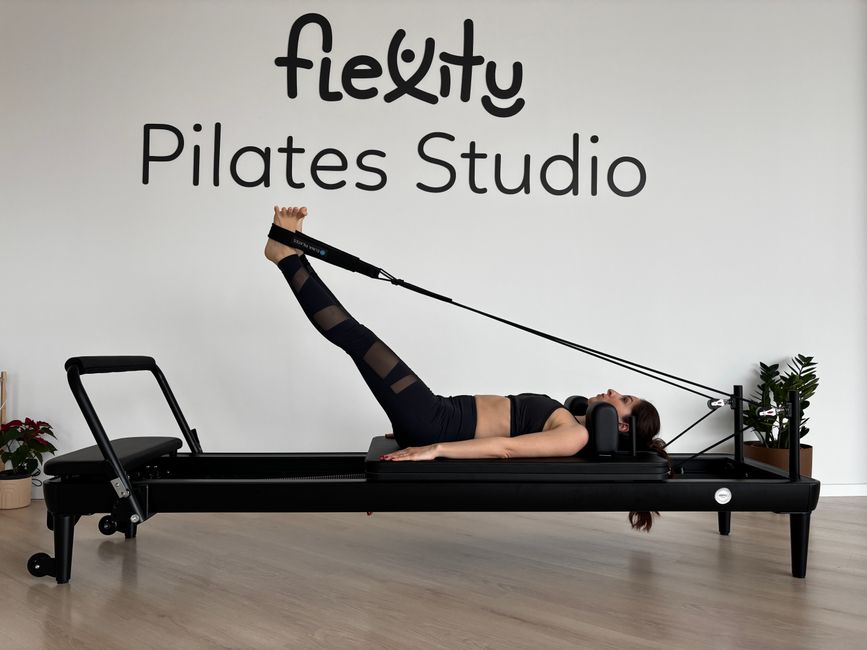
Bare feet on a reformer are slippery. Bare feet on a mat are fine, but most studios require grip socks for the reformer. Even if yours doesn’t, you want them.
Grip socks give you traction on the footbar during footwork and stability during planks. Without them, your feet slide forward, and your lower back compensates. That defeats the purpose of Pilates.
What to look for in grip socks:
- Silicone dots on the entire sole — not just the heel and toe. Full coverage prevents slipping in any position.
- Crew or ankle height — no-show socks slip off during reformer work.
- Open-toe or closed-toe? Open-toe lets you grip with your toes, which is important for articulation exercises. Closed-toe is warmer but limits toe mobility.
Tavi Noir ($18) makes the best open-toe grip socks I have found. The silicone pattern covers the whole bottom, they have a reinforced heel, and they come in solid colors that don’t look like costume pieces. PilatesProDesigns ($22) offers a closed-toe version with a wider toe box for wider feet.
One mistake: buying cheap grip socks with a tiny silicone patch on the heel. They slide off your foot within ten minutes. Spend the $18. They last two years of weekly classes.
5. What Not to Wear: The Complete Fail List
I have seen every mistake. Here is what you should leave in your closet:
- Loose sweatpants or joggers. They bunch under the carriage straps. You cannot see your leg alignment. The drawstring gets caught in the springs.
- Denim or stiff shorts. Zero stretch. You cannot do a single leg circle or hip hinge without restriction.
- Jewelry. Necklaces swing into your face during roll-ups. Rings scratch the reformer frame. Earrings catch on the headrest.
- Long hair down. It gets caught in the springs, sticks to your neck, and blocks your peripheral vision during side-lying work. A high ponytail or bun solves it.
- Strong perfume or lotion. The reformer vinyl absorbs it. The next person smells your scent for the whole class. And the lotion makes your skin slippery on the footbar.
If you are unsure, ask the studio. Most have a “what to wear” page on their website. Read it before your first class.
6. The One Outfit That Works for Every Pilates Style
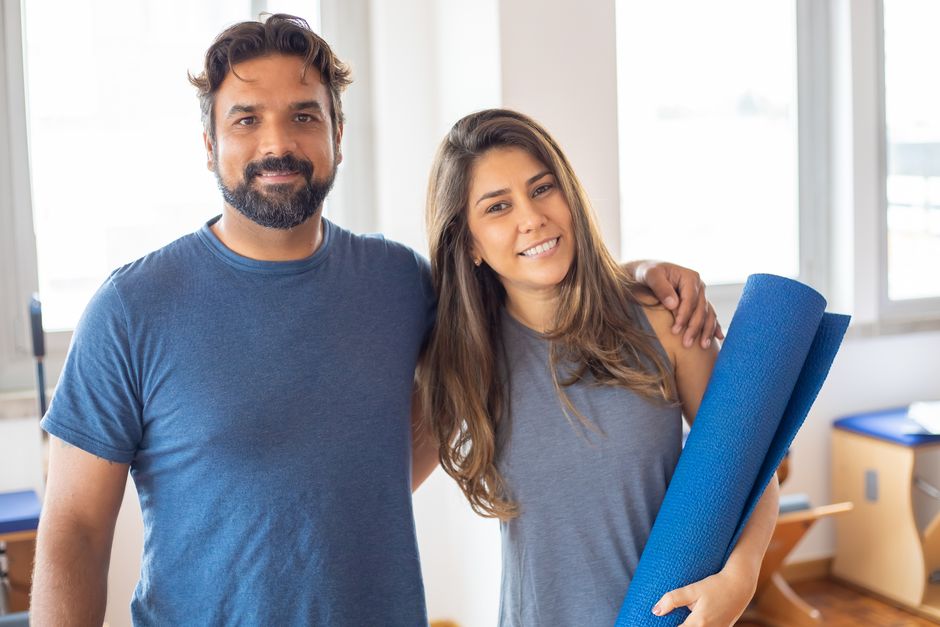
You want one outfit that works for reformer, mat, and tower classes. Here it is:
Top: Beyond Yoga Spacedye Caught in the Midst Bra ($68) or Lululemon Align Tank ($58). Both are fitted, have built-in support, and let the instructor see your spine.
Bottom: Girlfriend Collective High-Rise Pocket Legging ($68). Compressive but not restrictive. The waistband stays up during rolling exercises. The pocket holds your phone for the walk to class.
Socks: Tavi Noir Open-Toe Grip Socks ($18). Full silicone coverage, crew height, reinforced heel.
Total cost: $144 to $154. That is less than two months of unlimited Pilates classes, and this outfit lasts at least two years with proper care (wash cold, hang dry).
If you only buy one thing from this article, buy the grip socks. Everything else you can substitute with what you already own, as long as it is fitted, synthetic, and stays in place. The socks make the difference between a good class and a frustrating one.