A collar is a frame, not a decoration. Its highest point sits close to the jaw, its opening creates a second neckline, and its stiffness decides whether the eye travels upward or outward. Looking only at bust fit and sleeve length misses the part of a shirt that people notice first.
Begin with the collar standing naturally
Button the shirt to the point you would actually wear it, smooth the shoulder seams and then leave the collar alone. Do not press it flat for the mirror. The useful question is whether it holds a clean relationship with your neck once you move.
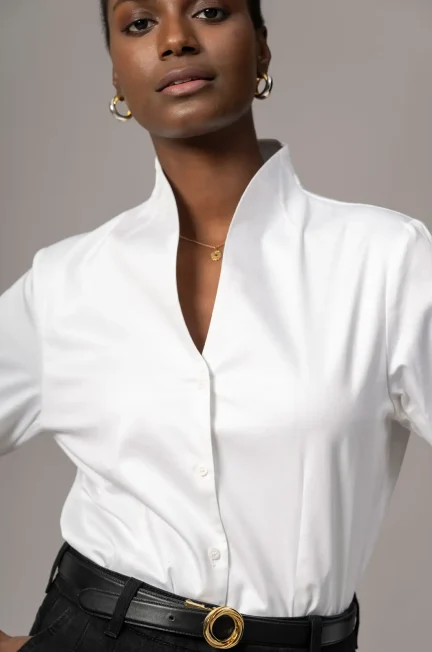
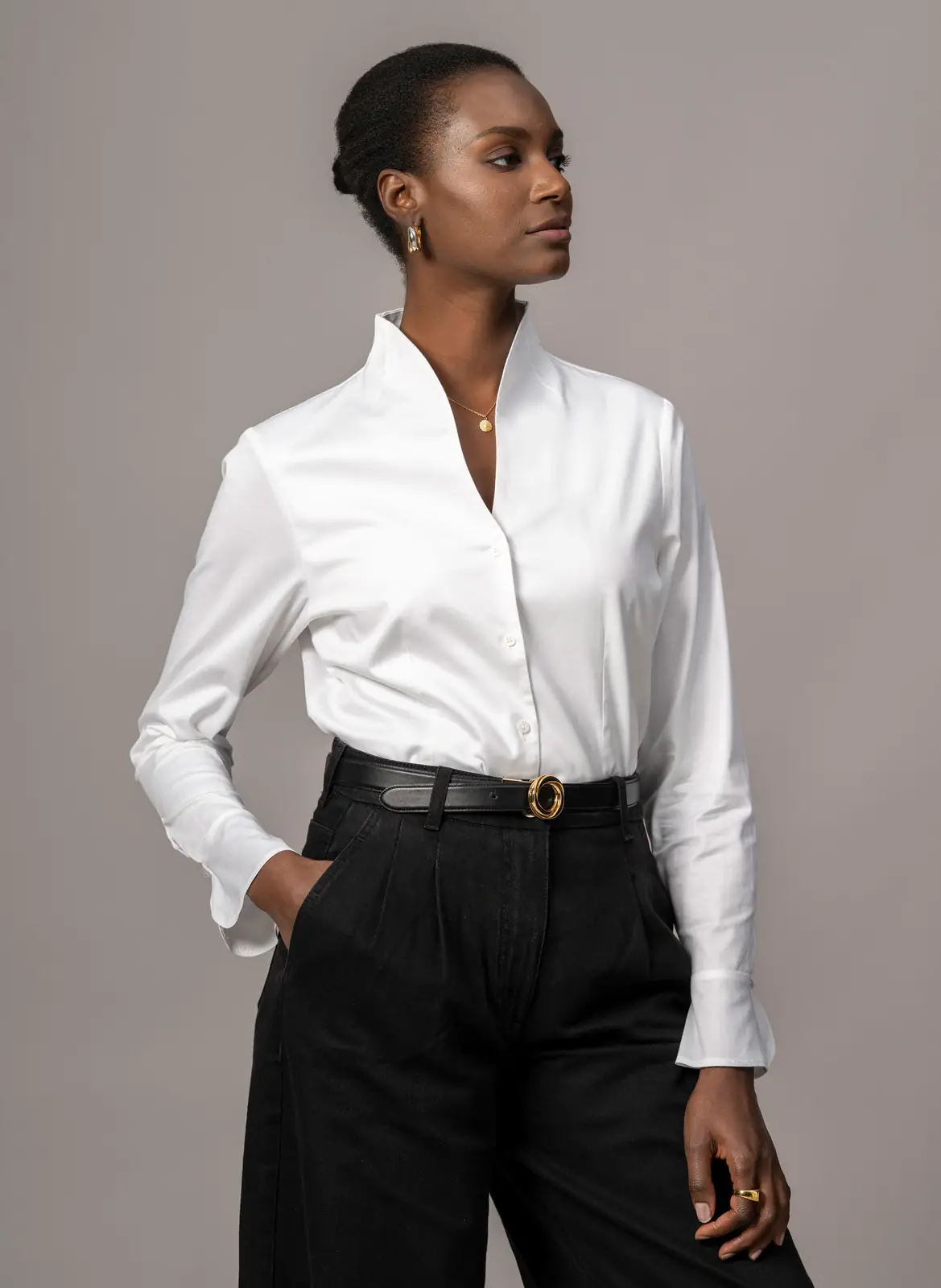
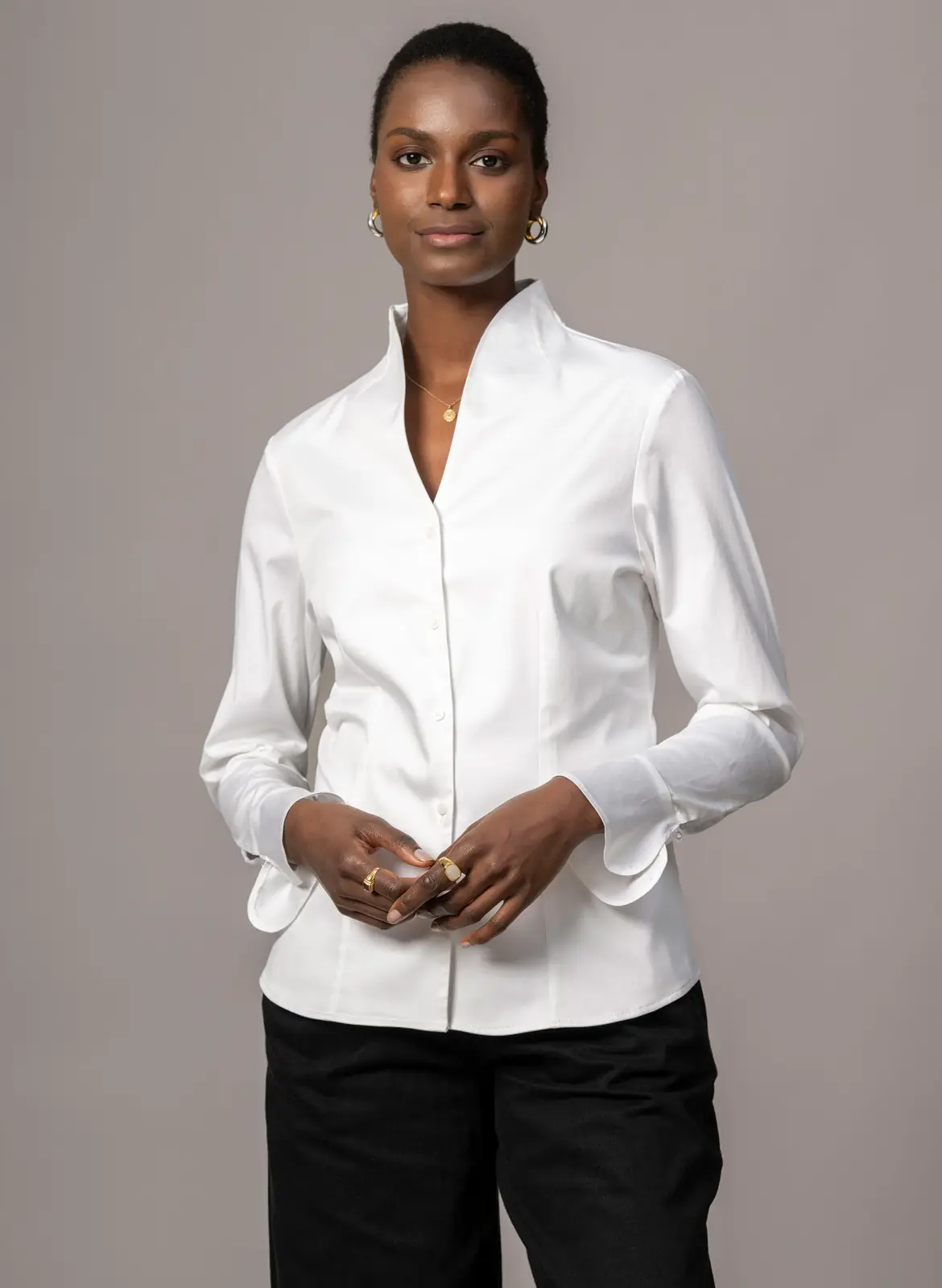
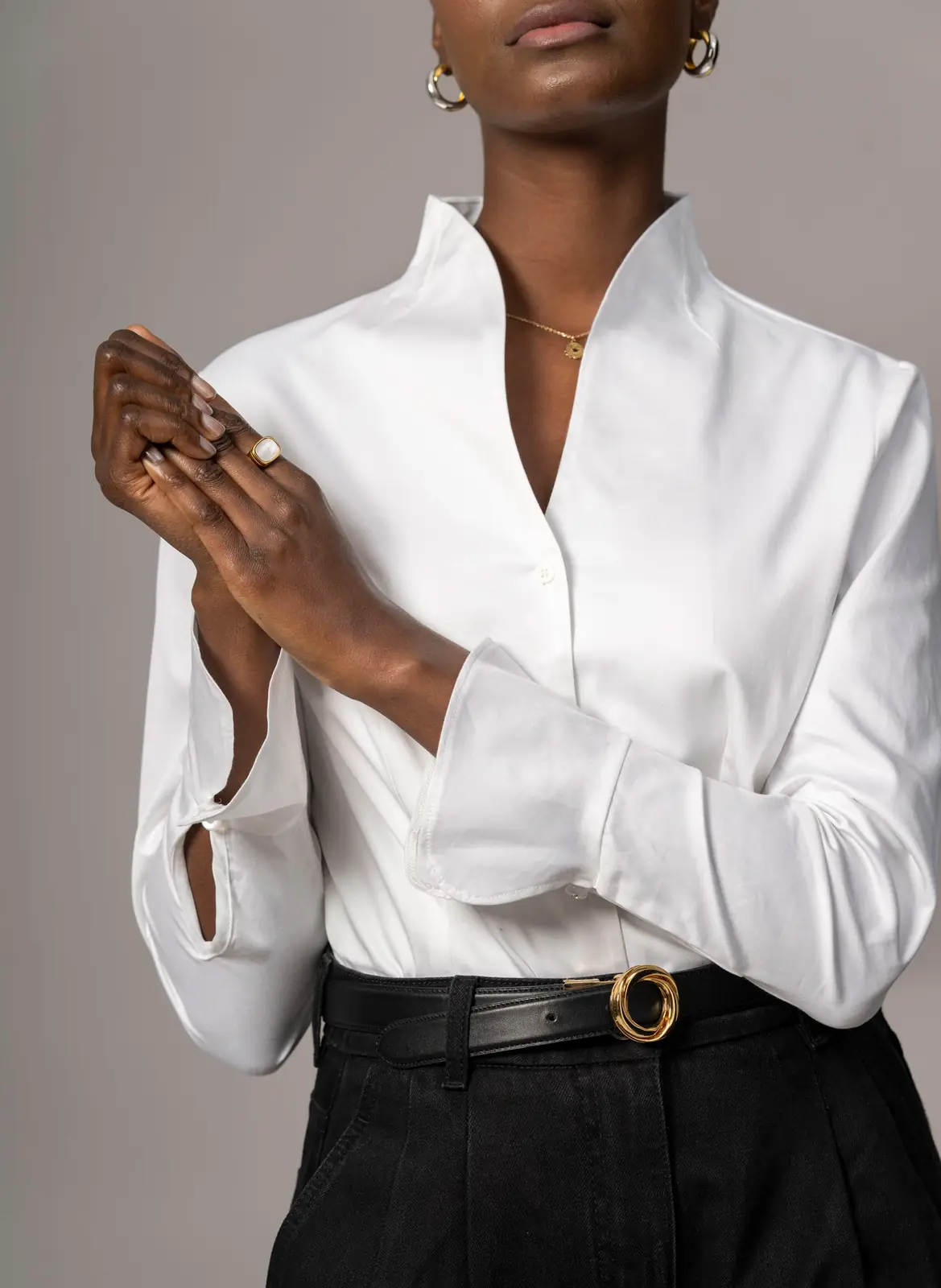
The Shirt Company’s Aria uses a sculptural tulip neckline rather than a conventional pointed collar. It is designed to frame the face and retain its shape, while the tailored body and hidden bust button keep the front line controlled. That makes it a useful example of how neckline architecture can do more than a necklace or scarf.
Run three checks before judging the whole shirt
Look straight ahead
Can you see a deliberate shape around the neck, or does the collar collapse into the shoulders? A clean outline should remain without constant adjustment.
Turn to profile
Check whether the back height crowds the hairline and whether the front edge pushes into the jaw. Comfort must survive more than a still photograph.
Add your usual jacket
The collar should sit over or inside the lapel on purpose. If the two shapes compete, simplify one of them rather than forcing both to be prominent.
Use proportion, not face-shape rules
Most advice reduces the decision to round, oval or square faces. Real proportions are more useful. Consider neck length, shoulder width, hairstyle volume, jacket lapels and the amount of open space you prefer at the chest. These factors change from outfit to outfit, which is why a collar that looks severe with a crew-neck coat can feel balanced on its own.
| If the collar feels… | Check this first | Try this adjustment |
|---|---|---|
| Too dominant | Height at the back neck | Open one button or remove a competing necklace |
| Too flat | Fabric recovery and collar structure | Choose a shaped neckline or add a crisp jacket lapel |
| Too formal | Symmetry and button position | Push sleeves up and soften the lower half with denim |
| Too busy | Earrings, collar and lapels together | Keep only one strong element near the face |
The right collar does not make your face obey a rule. It creates enough space for your features to look intentional.
Check the fabric after the neckline passes
A beautiful collar is not enough if the body is transparent, restrictive or difficult to maintain. Aria is cut in cotton sateen with a small amount of elastane, a double-layer front and a hidden button at the bust. Those details are practical because they support a smooth line without asking the wearer to stand still.
Raise both arms, sit down and reach forward. Watch the front placket and the collar base. If the shirt pulls sharply across the bust or the neckline twists, test another size or fit rather than hoping it will relax after purchase.
The final styling decision
When the collar is sculptural, the rest of the outfit can be quiet: straight trousers, a narrow belt, simple earrings and one controlled cuff. When the collar is classic and low, there is more room for a brooch, scarf or layered knit. The point is not minimalism for its own sake. It is giving each detail enough visual space to work.
Explore shirts built around the neckline
Compare The Shirt Company’s tailored, classic and statement-collar designs.