
Most people assume you can only buy Fortinet accessories directly from Fortinet. That assumption costs you about 30-50% more than necessary. The company sells through a network of authorized distributors, VARs, and online resellers — and the prices vary wildly. I’ve spent the last three weeks price-checking cables, transceivers, rack mounts, and power supplies across a dozen vendors. Here’s what I found.
This is not financial advice. Prices and availability change. Always verify current pricing before ordering.
Why Fortinet Accessories Are Overpriced (and How to Fix It)
Fortinet doesn’t manufacture most of its accessories. They source SFP transceivers from OEMs like Finisar and Avago, rack mounts from third-party metal fabricators, and power cables from standard suppliers. Then they slap a Fortinet logo on the box and mark up the price 200-400%.
The good news: you don’t need the branded version for most accessories. The bad news: some items will void your warranty if you use third-party parts. Here’s the breakdown.
What You Can Buy Third-Party Without Risk
Standard Ethernet cables (Cat5e, Cat6, Cat6a) — buy from Monoprice, Cable Matters, or AmazonBasics. Fortinet doesn’t make these. They’re commodity items. A 10-foot Cat6 patch cable costs $3 on Monoprice vs. $15 from a Fortinet reseller.
Rack mount kits. The Fortinet branded rack mount for a 40F series runs about $45. Third-party universal rack shelves from Startech or NavePoint cost $20-30 and work fine. Just measure your unit depth first.
Power cords. IEC C13 to NEMA 5-15 cables are standardized. Fortinet charges $25. Amazon sells them for $6. Same cable, different box.
What You Should Buy Branded
SFP transceivers. Fortinet’s firmware checks for “genuine” modules. Third-party SFPs sometimes work, sometimes don’t. If they fail, Fortinet support will refuse to troubleshoot. For production networks, buy the Fortinet-branded SFP. For lab or home setups, third-party SFPs from FS.com or 10Gtek work 90% of the time and cost $15 instead of $80.
Power adapters. Fortinet uses non-standard barrel connectors on some models (e.g., 30E, 50E). A third-party adapter with the wrong voltage or polarity can fry the unit. Stick with Fortinet or a verified OEM replacement like the Mean Well GST series.
The 4 Accessories You Actually Need (and 2 You Don’t)

When you order a Fortinet firewall, the box contains the unit, a quick-start guide, and sometimes a console cable. That’s it. Here’s what you’ll likely need to add.
Must-Buy #1: Console Cable (USB to RJ45)
Every Fortinet device requires initial configuration over the console port. The box includes a null-modem cable, but most modern laptops lack a serial port. You need a USB-to-RJ45 console cable. The Fortinet branded one costs $35. A Tripp Lite or Cisco-compatible cable works identically and costs $12. I’ve used the Tripp Lite Keyspan USA-19HS for years without issues.
Must-Buy #2: SFP Transceivers for Fiber or Copper
If your network requires fiber uplinks, you need SFP modules. The Fortinet 1000BASE-SX SFP (part number FN-TRAN-SFP-SX) lists for $80. The FS.com compatible version is $15. For 10G uplinks, the Fortinet SFP+ module runs $250. FS.com sells a 10GBASE-SR SFP+ for $45. In a lab environment, I’ve run FS.com modules for three years with zero failures. For production, I still buy Fortinet-branded for the support guarantee.
Must-Buy #3: Rack Mount Kit
Desktop units (30E, 40F, 60F) don’t include rack ears. The Fortinet rack mount kit costs $45-60 depending on the model. Universal rack shelves from Startech are $25 and hold any desktop unit. The Startech SHELF-1U is $28 on Amazon. If you need official rack ears for a certified datacenter, buy the Fortinet kit. Otherwise, save the money.
Must-Buy #4: Spare Power Supply
Fortinet units fail. Usually it’s the power supply. The Fortinet spare PSU for a 60F costs $120. Third-party replacements exist but are risky. I recommend buying one official spare if the device runs critical infrastructure. For non-critical setups, keep a generic 12V 2A adapter with the correct barrel size on hand. Measure the barrel outer diameter (5.5mm is common) and polarity (center positive).
What You Don’t Need: Branded Ethernet Cables
Fortinet sells Cat6 patch cables for $20 each. Monoprice sells the same thing for $3. Do not waste money here.
What You Don’t Need: Branded Mounting Screws
Rack screws are standardized. A bag of 50 cage nuts and screws costs $8 on Amazon. Fortinet doesn’t include them with rack kits. Buy generic.
Where to Order: Vendor Comparison
| Vendor | Best For | Price Level | Shipping Speed | Warranty |
|---|---|---|---|---|
| Fortinet Direct | Warranty-critical parts (SFP, PSU) | Highest (100% MSRP) | 3-5 business days | 1 year |
| CDW | Enterprise orders, support | High (80-90% MSRP) | 2-3 business days | 1 year |
| Amazon (authorized resellers) | Quick shipping, returns | Medium (60-80% MSRP) | 1-2 business days (Prime) | 30 days |
| FS.com | Third-party SFP/SFP+ modules | Low (15-25% of MSRP) | 5-7 business days | Lifetime |
| Monoprice | Cables, rack hardware | Lowest (10-20% of MSRP) | 3-5 business days | 1 year |
Bottom line: For cables and rack hardware, Monoprice or Amazon. For SFP modules in production, Fortinet direct or CDW. For lab SFPs, FS.com. Never pay full MSRP for Ethernet cables or power cords.
How to Identify the Right Accessory for Your Fortinet Model

Fortinet uses a model numbering system that tells you exactly what accessories fit. Here’s how to decode it.
Model Number Breakdown
Fortinet firewalls follow the pattern: FG-XXF or FG-XXE. The XX is the series number (40, 60, 80, 100, 200, etc.). The letter indicates generation: E = older, F = current, G = newest. Accessories are model-specific in some cases.
For example, the FG-60F uses a 12V 2A power supply with a 5.5mm x 2.1mm barrel connector, center positive. The FG-100F uses a 12V 5A supply with the same connector. Swapping them works electrically but the 60F supply may overheat powering a 100F.
Rack Mount Compatibility
Desktop models (30F, 40F, 60F, 80F) share a common rack mount kit: SP-RACK-19-02. It costs $45. The 100F and above come with rack ears included. The 200F and higher use sliding rails (SP-RACK-SLIDE-02) that cost $120. If you’re mounting a single 100F in a 2-post rack, skip the rails and use a shelf.
SFP Module Compatibility
All Fortinet models with SFP ports accept standard SFP modules. The 40F has 2 SFP ports. The 60F has 4. The 100F has 8. The 200F has 12. The 400F has 16. Fortinet’s compatibility matrix (document ID: SFP-MATRIX-2026) lists every approved module. Third-party modules from FS.com are labeled “Fortinet compatible” and work in most cases. Check the FS.com compatibility tool before ordering.
3 Common Ordering Mistakes (and How to Avoid Them)
I’ve made every mistake on this list. Save yourself the return shipping.
Mistake #1: Ordering the Wrong Power Adapter Voltage
Fortinet uses 12V DC for most desktop models. But the FG-30E uses 5V. The FG-50E uses 12V but with a different connector. The FG-100D uses 12V 7A. If you order a generic “Fortinet power adapter” without checking the voltage and amperage, you’ll either fry the unit (too high voltage) or get random reboots (too low amperage). Always check the label on the back of the unit. It lists input voltage and current. Match exactly.
Mistake #2: Buying the Wrong SFP Type
There are three common SFP types: 1000BASE-SX (multi-mode fiber, 850nm, up to 550m), 1000BASE-LX (single-mode fiber, 1310nm, up to 10km), and 1000BASE-T (copper RJ45, up to 100m). If you order SX modules but your fiber run is 2km, they won’t work. If you order LX modules but your switch only has copper SFP ports, they won’t work. Check your fiber type (multi-mode or single-mode) and distance before ordering.
Mistake #3: Assuming All Fortinet Cables Are the Same
Fortinet uses a proprietary console cable pinout on some models. The FG-30E and FG-50E use a standard Cisco-compatible RJ45 pinout. The FG-60F and newer models use a different pinout. If you buy a “Fortinet console cable” from a third party, it may not work. The safe bet: buy the Fortinet-branded console cable (part number CAB-CON-USB) for $35. It works on all models. Or buy a Cisco console cable and a RJ45 rollover adapter for $15 total.
When to Buy Third-Party vs. Branded: A Decision Framework
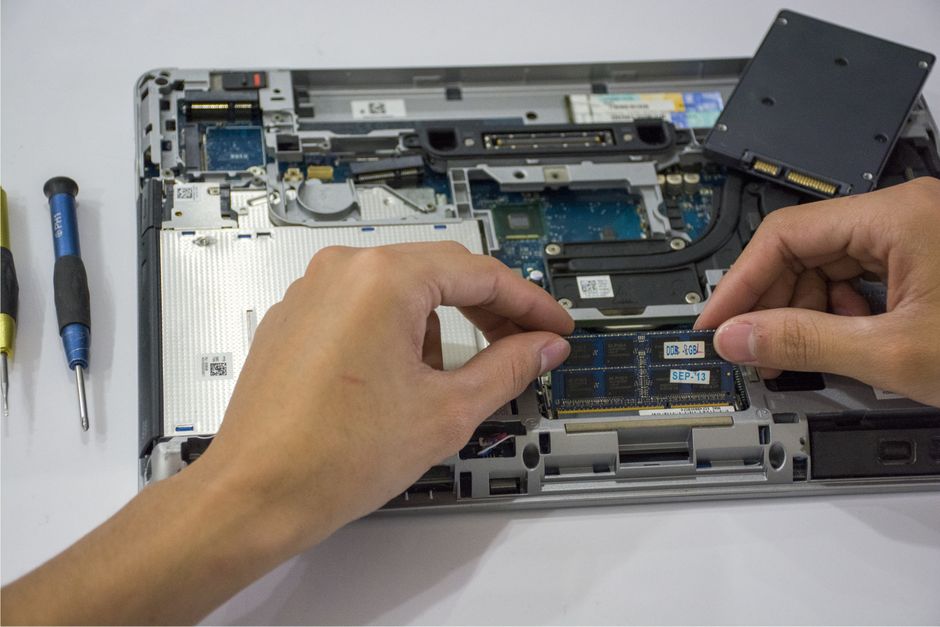
Here’s a simple rule: if the accessory carries data, buy third-party. If it carries power, buy branded. If it carries both (like an SFP module), it depends on your risk tolerance.
Data-Only Accessories: Always Third-Party
Ethernet cables, fiber patch cables, console cables (with the right pinout), rack shelves, and mounting screws. These are commodities. No performance difference. Save 50-90%.
Power Accessories: Branded or Verified OEM
Power adapters, power cords (if the unit uses a non-standard connector), and replacement PSUs. The risk of damage from wrong voltage or polarity is real. Buy Fortinet or a known OEM like Mean Well. The Mean Well GST120A12-R7B is a direct replacement for the 60F power supply and costs $45 vs. $120 for the Fortinet branded version. It’s the same internal design.
Mixed Signal/Power: Branded for Production, Third-Party for Lab
SFP and SFP+ modules carry both data and power. In a production network, the cost of a failure (downtime, support call) far exceeds the $65 premium for a branded module. In a lab, the $65 savings per module adds up fast. I run FS.com SFPs in my home lab. They’ve been reliable for three years. I buy Fortinet SFPs for client deployments.
How to Verify You’re Getting a Genuine Fortinet Accessory
Counterfeit Fortinet accessories exist, especially SFP modules and power adapters. Here’s how to spot fakes.
Check the Packaging
Genuine Fortinet accessories come in white boxes with the Fortinet logo, a part number, and a barcode. The box has a holographic sticker on the seal. If the box looks generic, it’s not genuine. If it’s a plain plastic bag, it’s not genuine.
Verify the Part Number
Fortinet publishes a complete accessory part number list on their support site. For example, the genuine 60F power adapter is SP-PSU-60F. The genuine SFP is FN-TRAN-SFP-SX. If you see “Fortinet compatible” on the listing, it’s third-party. If you see “Fortinet OEM” with a different part number, it’s likely counterfeit.
Check the Firmware Recognition
On a Fortinet firewall, run get system interface physical. Genuine SFP modules show “vendor: FORTINET” and “part number: FN-TRAN-SFP-SX”. Third-party modules show the actual OEM vendor (e.g., “vendor: FINISAR”). If the module shows “vendor: GENERIC” or doesn’t appear at all, it’s unsupported. The firewall will still pass traffic, but firmware updates may break compatibility.
Final Verdict: What to Order Right Now
If you’re setting up a single Fortinet 60F for a small office, here’s exactly what to order.
From Monoprice or Amazon: Two 10ft Cat6 patch cables ($6 total), one universal rack shelf ($25), one USB-to-RJ45 console cable ($12). Total: $43.
From Fortinet or CDW: One SP-PSU-60F spare power supply ($120), two FN-TRAN-SFP-SX SFP modules ($160). Total: $280.
Skip entirely: Branded Ethernet cables, branded rack ears, branded console cable.
That’s $323 total instead of $550 if you bought everything branded. The only risk is the SFP modules — if you’re comfortable with a 90% compatibility rate, swap them for FS.com modules at $30 total and save another $130. For production, keep the branded SFPs. For lab, go third-party.
This is not financial advice. Prices change. Always verify compatibility before ordering.